

Maritime Satellite IoT: Navigating the 2026 Connectivity Gap
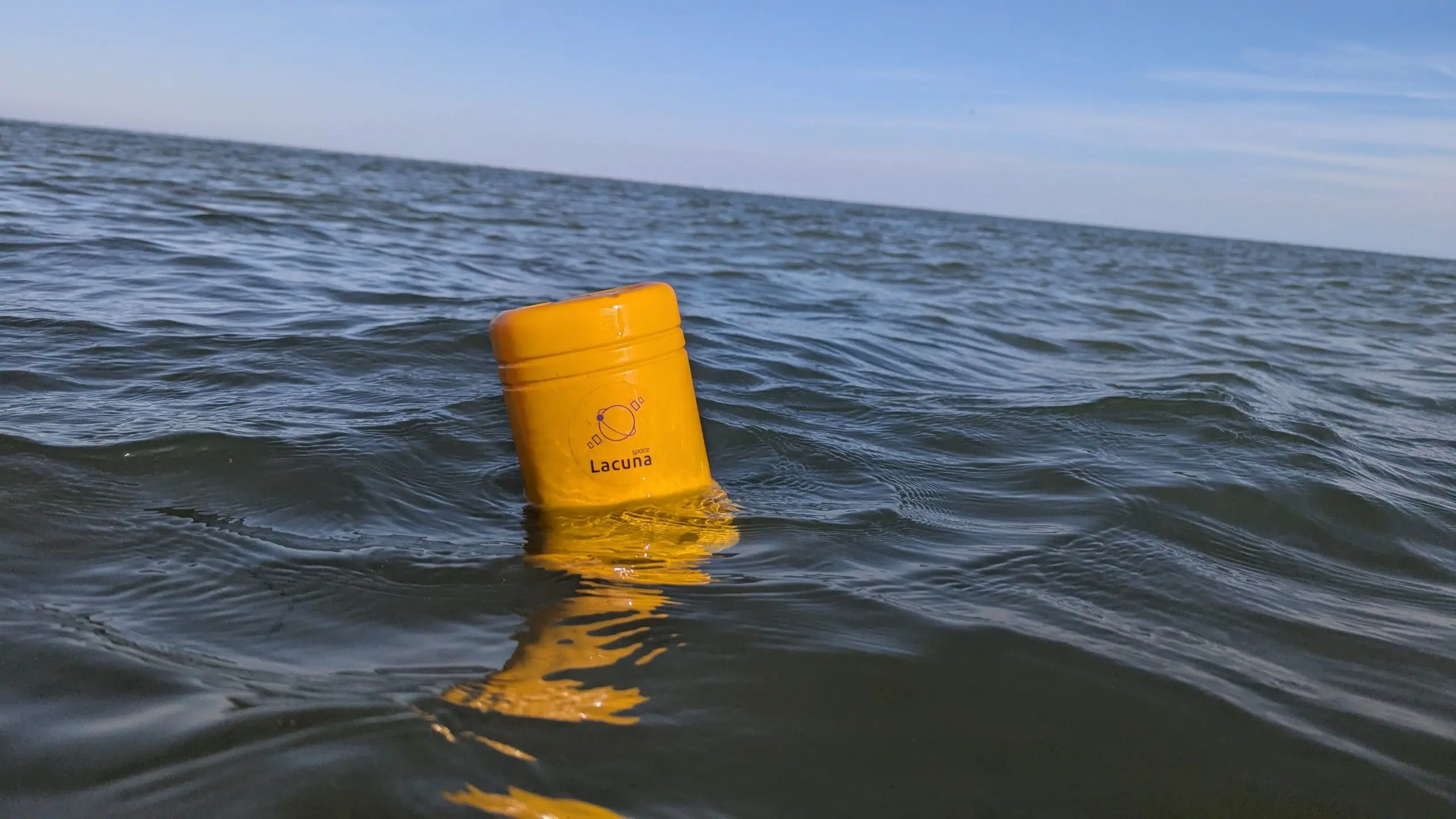
Connecting the unconnectable starts with a whisper from the deep blue, turning a silent ocean into a global heartbeat of data.
The ocean is the final frontier of global trade, yet it remains remarkably silent. While it facilitates nearly 90% of the world’s commerce and regulates the very air we breathe, we are operating in a data vacuum (UNCTAD, 2024). Even as the Blue Economy moves toward a projected $3 trillion valuation by 2030, our ability to monitor it has lagged behind (OECD, 2023).
For those steering maritime logistics or offshore energy, this information vacuum represents a hard limit on operational performance. When an asset crosses the horizon, it effectively disappears from the digital map. This lack of visibility leads to a reactive, high-cost culture where we only learn about a failure after it has happened. To fix this, we have to change how we think about distance and power.
The Barrier: The Physics of Distance
To understand why the ocean is a data black hole, we have to look at how we’ve traditionally tried to talk to the sky. Most satellite communication relies on Geostationary (GEO) satellites. These are massive, expensive machines orbiting 36,000km above the Earth.
To reach a target that far away, a sensor on the water has to “scream.” It requires a significant amount of power to punch a signal through the atmosphere to such a high altitude. This high power requirement creates a cascade of logistical failures:
- The Battery Weight: Sensors need large, heavy battery packs or bulky solar arrays.
- The Maintenance Trap: These batteries drain in weeks or months, requiring a crewed vessel to travel hundreds of miles offshore just for a swap.
- The Environmental Cost: High-power electronics fail more frequently in corrosive salt air, leading to discarded hardware and a massive carbon footprint from maintenance voyages.
This is the “Battery Death Spiral.” It makes massive-scale monitoring impossible because the cost of maintaining the network exceeds the value of the data.
The Solution: A Gateway in the Sky
Lacuna Space has fundamentally changed the physics of this interaction. Instead of asking a sensor to scream to a satellite 36,000km away, we’ve brought the satellite to the sensor.
Our constellation operates in Low Earth Orbit (LEO), just 500km above the surface. By reducing the distance by over 98%, we allow the sensor to “whisper.” Using the open LoRaWAN® standard, a device can send a data packet to our satellite using the same amount of energy it takes to send a simple text message on land.
How it Works: LoneWhisper® Technology
We’ve essentially placed a LoRaWAN gateway, the same kind used in smart cities, into orbit. When a sensor on a buoy, a shipping container, or a wind turbine foundation has data to share, it waits for a Lacuna satellite to pass overhead.
Through our LoneWhisper® technology, the satellite “listens” for these low-power signals across vast areas of the ocean. It captures the data, stores it, and then downlinks it to a ground station, where it is delivered directly to the user’s dashboard. This process is entirely infrastructure-free. You don’t need a base station on a nearby island or a million-dollar antenna on the deck of a ship. You just need the sensor and the sky.
The Story in the Field: Real-World Resilience
When we solve the power problem, we solve the scalability problem. Here is how that “whisper” translates into operational reality.
1. Global Asset Tracking: Visibility in a Broken Supply Chain
In 2026, knowing a container’s location is only half the battle. Knowing the condition of the cargo prevents total loss during port delays.
- The Problem: Once a container sits on a ship in the middle of the Atlantic, visibility vanishes. If a refrigerated unit fails during a three-week diversion around the Cape of Good Hope, the crew might not notice until thousands of dollars of stock are ruined.
- The Lacuna Solution: We embed low-power trackers and condition sensors directly onto containers.
- The Impact: These sensors monitor temperature, humidity, and shock, sending status updates to our satellites throughout the voyage. Logistics providers verify cold-chain integrity in real-time. This is critical when you consider that 13% of all food produced globally is lost in the supply chain before it ever reaches retail (FAO, 2024).
2. Precision Aquaculture: Securing the Harvest
Aquaculture is the fastest-growing food sector in the world, yet it is highly sensitive to environmental shifts. A sudden drop in dissolved oxygen can wipe out up to 20% of a farm’s stock in a single afternoon (FAO, 2024).
- The Problem: Most farms sit in remote lochs or offshore areas where cellular signals die. Hand-sampling water quality is slow and dangerous in high seas.
- The Lacuna Solution: We deploy low-cost sensors directly into the pens to monitor oxygen, temperature, and salinity 24/7.
- The Impact: Farm managers receive alerts via satellite. Instead of guessing, they receive the data needed to adjust feeding or aeration immediately. We turn a potential $500,000 loss into a simple operational adjustment.
3. Offshore Energy: Building the Digital Twin
Global offshore wind capacity must increase fifteen-fold by 2040. However, monitoring the structural integrity of a turbine foundation in the middle of the North Sea is a logistical challenge (IEA, 2024).
- The Problem: Running fiber-optic cables to every sensor is prohibitively expensive. Wireless options often fail due to salt-spray corrosion and high power constraints.
- The Lacuna Solution: We embed small, LoRaWAN-enabled vibration and strain sensors into the turbine structures.
- The Impact: These sensors monitor the heartbeat of the turbine for years without a battery change. We provide the ground-truth data needed for a Digital Twin, allowing operators to predict failures and avoid emergency repair trips that cost upwards of $100,000 per outing.
Hybrid Resilience: The Coast-to-Horizon Bridge
We often see companies hesitate to adopt satellite tech because they fear vendor lock-in or complex hardware. We solved this through Hybrid Resilience.
Most maritime journeys begin near a coast. By using the open LoRaWAN® standard, your devices talk to terrestrial gateways while in the harbor. As the vessel moves beyond the reach of the shore or when port infrastructure fails the device doesn’t need to change its language. It simply begins talking to the Lacuna satellites passing overhead.
This shared infrastructure model allows a CTO to validate their IoT services in a controlled coastal environment today, reducing technological risk before they push their assets into the deep blue. You use the same sensors, the same dashboard, and the same team for the entire journey.
A Vision for Clean Space
As a UK-based innovator, we don’t operate in a vacuum. We work alongside the UK Space Agency and the European Space Agency (ESA) to ensure that the Blue Economy is built on intelligence, not guesswork.
However, our commitment to sustainability extends beyond the waterline and into the stars. Sustainability must be circular. If we fill our orbits with space junk, we haven’t solved the problem; we’ve just moved it. This is why we design every Lacuna satellite for responsible de-orbiting.
We listen to the whispers from the wild without leaving a permanent footprint in the sky.
Stop Guessing. Start Measuring.
The data black hole is closing. Whether you are tracking industrial fishing compliance, monitoring a remote marine protected area, or managing a global fleet, the technology to see the unseen is finally here and it is finally affordable.
We are shifting the economics of the ocean from a silent giant to a connected ecosystem. The unconnectable parts of our planet are finally ready to speak. We are here to listen.
Are you ready to bring your maritime operation into the light? Lacuna Space is here to help you scale.
About Lacuna Space
Lacuna Space delivers direct-to-device IoT connectivity service using ultra-low-power protocols optimised for small, infrequent messages. Built on its proprietary LoneWhisper® technology, Lacuna Space’s network supports remote sensors across agriculture, environment, utilities, and the oceans — enabling reliable global coverage with no ground infrastructure.
Lacuna Space operates from offices in the UK and the Netherlands, with support from the UK Space Agency and the European Space Agency.